
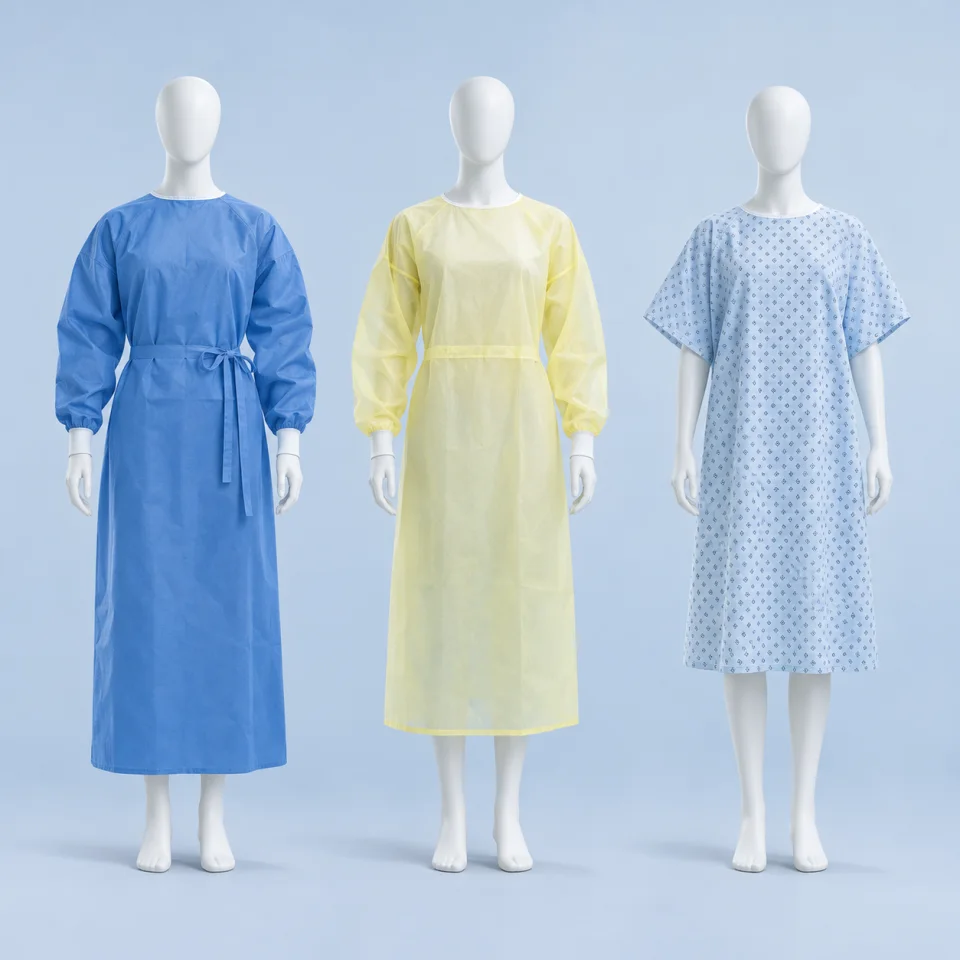
Medical gowns are an essential part of infection prevention and personal protective equipment (PPE) in healthcare settings. They help protect healthcare professionals, patients, and visitors from exposure to fluids, contaminants, and potentially infectious materials.
Different gowns are designed for different levels of protection and specific medical procedures.
In this guide, we explore the main types of medical gowns, their uses, materials, and the factors to consider when choosing the right gown for your healthcare facility.
What Is a Medical Gown?
A medical gown is a protective garment worn by healthcare professionals and other medical staff to reduce the risk of contamination during patient care, medical examinations, and surgical procedures.
Depending on its design and intended use, a medical gown may protect the wearer from contact with blood, body fluids, microorganisms, and other potentially hazardous substances.

Medical gowns are commonly used in:
- Hospitals and medical centers
- Operating rooms
- Clinics and outpatient facilities
- Laboratories
- Emergency departments
- Isolation and patient-care areas
What Are the Different Types of Medical Gowns?
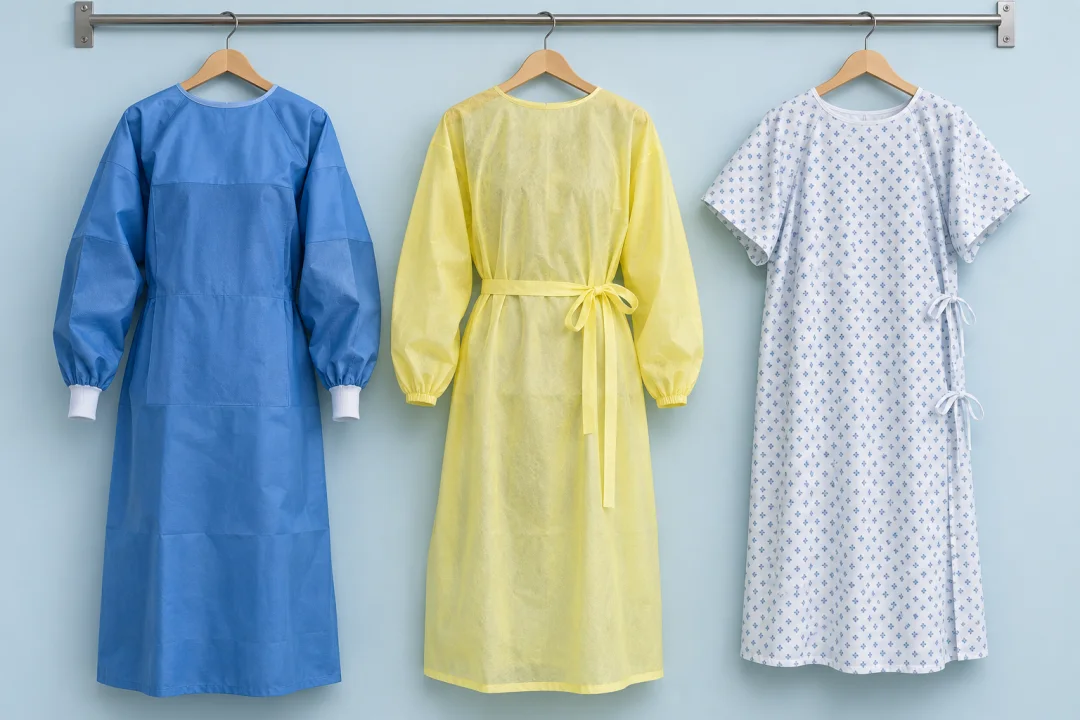
Medical gowns can be grouped by intended use, such as surgery or isolation, and by whether they are designed for single use or reuse.
1. Surgical Gowns
Surgical gowns are designed for surgeons and operating-room staff during surgical procedures. They provide a barrier against the transfer of microorganisms and contact with blood and other body fluids. Protective performance depends on the gown’s material, construction, and applicable standards.
- Supplied sterile for use in a sterile field
- Available in different barrier protection levels
- May have reinforced areas for additional protection
- Usually have long sleeves and secure closures
Select surgical gowns based on the expected exposure during the procedure and the applicable healthcare standards.
2. Isolation Gowns
Isolation gowns help protect healthcare workers from contact with potentially infectious materials while caring for patients. They are commonly used in isolation rooms and in situations where contact precautions are required.
- Designed to cover the torso and arms
- Available in different materials and protection levels
- Often feature back closures and waist ties
- Commonly available as disposable products
Choose an isolation gown based on the anticipated exposure and the facility’s infection-control procedures.
3. Patient Examination Gowns
Patients wear examination gowns during medical examinations, diagnostic procedures, and some treatments. Their primary purpose is to provide coverage and make examinations easier.
- Lightweight and comfortable
- Easy to put on and remove
- Designed to provide appropriate patient coverage
- Available in disposable and reusable options
4. Disposable Medical Gowns
Disposable medical gowns are designed for single use and are discarded according to the facility’s waste-management procedures. They are widely used in hospitals, clinics, laboratories, and other healthcare settings.
- Designed for one use
- Help reduce the need for laundering
- Available in different materials, designs, and barrier protection levels
Depending on the application, disposable gowns may be made from nonwoven materials such as SMS. See our guide to disposable medical gowns for more on materials, uses, and packing.
5. Reusable Medical Gowns
Reusable medical gowns are designed to be laundered, inspected, and used again according to the manufacturer’s instructions and the healthcare facility’s protocols. They are commonly made from durable textiles.
- Designed for repeated use
- Require proper laundering, maintenance, and inspection for damage
- Must maintain their required protective performance throughout their service life
What Materials Are Used in Medical Gowns?
The material used in a medical gown affects its comfort, durability, and protective performance.

SMS (Spunbond-Meltblown-Spunbond)
SMS nonwoven fabric combines two spunbond outer layers with a meltblown layer between them. For SMS medical gowns, check the finished product’s specifications and documented barrier rating for the intended use.
PP (Polypropylene)
Polypropylene is a lightweight synthetic material commonly used in disposable medical garments. It is often selected for its low weight and cost.
Spunlace Nonwoven Fabric
Spunlace is a nonwoven fabric produced by entangling fibers using high-pressure water jets. It is known for its soft feel and is used in selected medical and hygiene products.
How to Choose the Right Medical Gown
Start with the intended use and the level of protection required for the task.
Purpose of use
Identify whether the gown is needed for surgery, isolation, patient examination, or general medical care.
Protection level
Assess expected exposure to blood, body fluids, and potentially infectious materials. Verify the barrier level on the product label.
Material
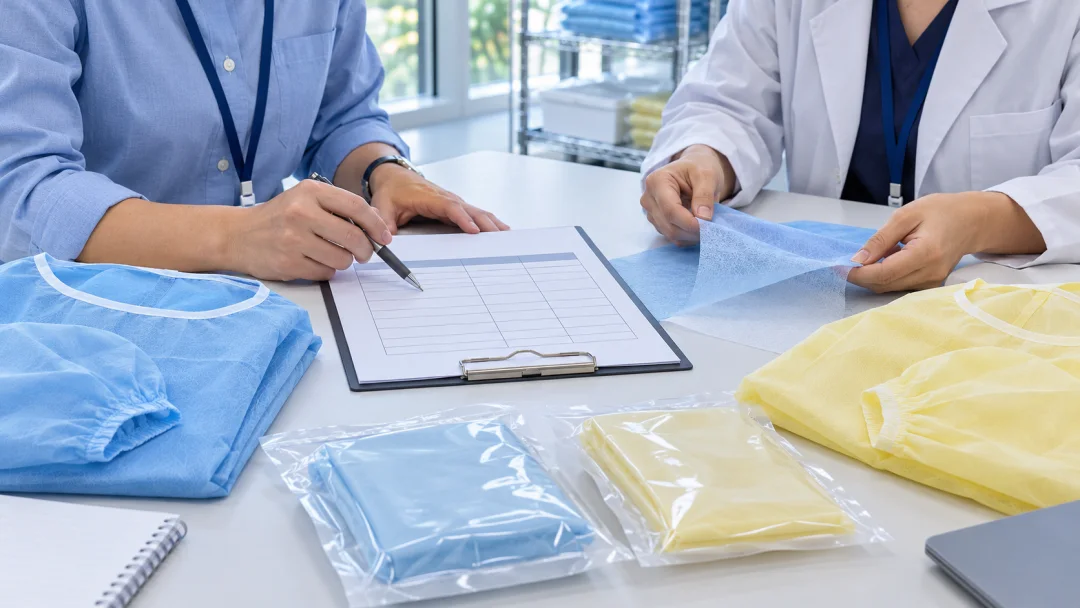
Choose a material and gown construction suitable for the task. Review the finished gown’s performance documentation.
Comfort and fit
Check the size, coverage, and closures. The gown should allow the wearer to move comfortably during the task.
Sterility
Confirm whether the procedure requires a sterile gown and verify the status on the label and packaging.
Quality and standards
Check the manufacturer’s specifications, applicable standards, and supporting product documentation.
ANSI/AAMI PB70 classifies liquid barrier performance from Level 1 for minimal risk through Level 4 for high risk. Check the stated rating against the intended use and the standards applicable in your market. FDA guidance on medical gowns and barrier levels.
Always follow your healthcare facility’s infection-prevention policies and the manufacturer’s instructions.
Why Are Medical Gowns Important in Healthcare?
When selected and used correctly, medical gowns help reduce contamination and support safer working environments for healthcare professionals and patients.
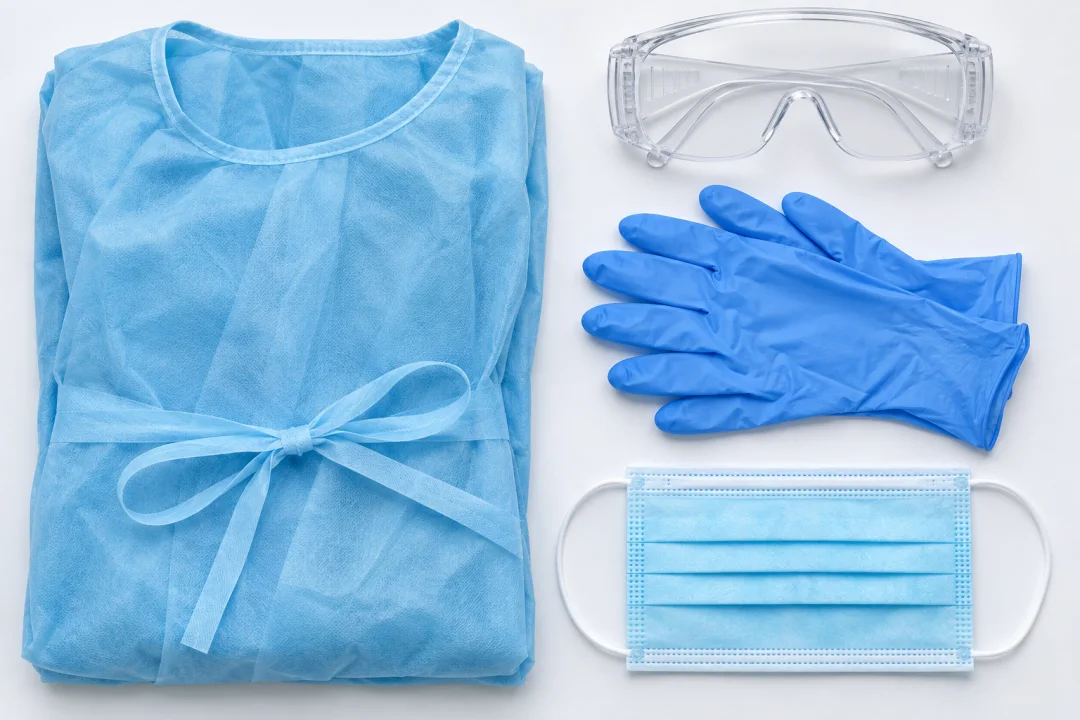
Use gowns alongside appropriate gloves, masks, eye protection, and other protective measures as required for the task.
Medical Gowns from Monitor Medical Supplies
Monitor Medical Supplies Factory manufactures medical gowns and other essential medical supplies for hospitals, clinics, distributors, and healthcare suppliers.
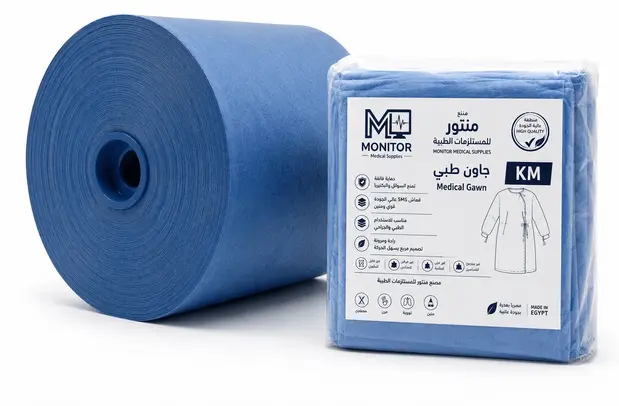
When choosing a medical gown manufacturer, look for clear documentation of the materials, intended use, and product specifications. See the Monitor medical gown for product details.
Contact Monitor Medical Supplies Factory to learn more about our gowns and available specifications.
- Phone +20 122 979 7002
- Email info@monitormedfactory.com
- Website monitormedfactory.com
Monitor Medical Supplies
Egyptian-made products with high quality.